
May 2026 – Single-sex facilities in the workplace – the latest position
Following a recent High Court decision, we set out the position regarding trans access to single-sex facilities and the practical options for employers.

The High Court has confirmed that employers must provide their single-sex workplace toilets and changing room facilities on a biological basis in order to comply with health and safety requirements, but that trans staff should not be left without adequate, non-discriminatory facilities. This may potentially include employers offering additional, trans-inclusive single-sex facilities (although this is untested). Employers may also provide gender-neutral facilities, provided they meet health and safety requirements.
Background
Following the Supreme Court decision in For Women Scotland earlier this year, organisations have keenly awaited further guidance on how to approach trans employees’ access to single-sex spaces. While it was previously widely understood that trans people should be able to access single-sex spaces aligned to their gender identity, the Supreme Court’s decision created uncertainty when it held that “sex” has a biological meaning for the purposes of the Equality Act 2010.
One reason for this lack of certainty was that the Equality Act does not explicitly govern single-sex facilities in the workplace. These are covered by the Workplace (Health, Safety and Welfare) Regulations 1992, a separate piece of legislation which makes no comment on the meaning of “men” and “women”.
This situation caused extensive debate about what kind of facilities need to be offered by employers, to avoid claims from employees of discrimination. Claims could be made by trans employees (alleging that they are now prevented from using the facilities of their gender identity), or non-trans employees (alleging that the employer has failed to provide single-sex facilities, where trans employees have been permitted to use them).
Recent case law prior to the High Court decision
Prior to the High Court’s decision, we saw a flurry of Employment Tribunal decisions on the topic of objections raised about trans employees’ access to single-sex facilities in the workplace. Peggie, Kelly and Hutchison all considered similar questions, and came to some very different conclusions about how employers should treat single-sex spaces within workplaces.
For example, while Peggie and Kelly concluded that employers do not need to guarantee that single-sex women’s spaces are reserved for biological (i.e. cis) women, Hutchison reached the opposite conclusion. This lack of coherence shows the complexity and uncertainty employers faced.
The recent High Court decision, which post-dates these Employment Tribunal judgments, is now the leading authority on the topic, and we would therefore expect future Tribunal decisions to follow it.

The High Court’s decision
The High Court concluded that “men” and “women” in the Health & Safety Regulations should be interpreted in line with biological sex. This is the case even if an employee has a Gender Recognition Certificate.
This means that single-sex facilities which employers provide to comply with the Health & Safety Regulations should be operated on the basis of biological sex, i.e. trans people should not use the facilities aligned to their gender identity, as this will mean the facilities are no longer single-sex.
The High Court, however, observed that the requirements in the Health & Safety Regulations are a floor, not a ceiling. Once they meet that floor, employers can make additional provision to address the needs of their workforces. It may be possible to offer additional single-sex facilities in a trans-inclusive way without them becoming gender-neutral, i.e. employers may be able to offer some trans-inclusive women’s toilets which are accessible to trans women but not to cis men.
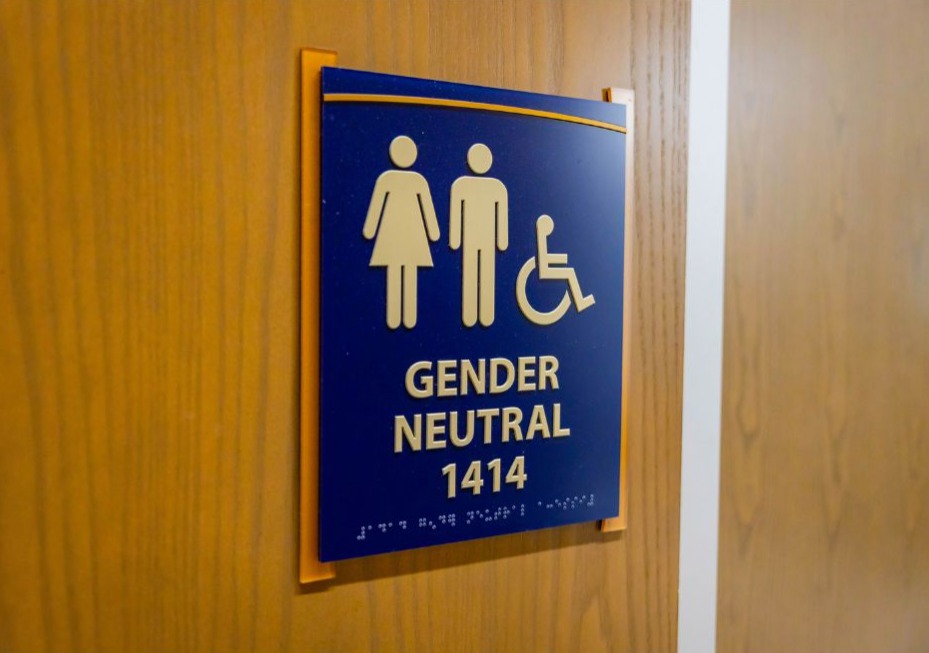
It is also very likely to be sensible for employers to offer at least some gender-neutral facilities, in addition to any single-sex facilities, provided these are also compliant with the requirements under the Health & Safety Regulations.
The High Court found that trans people should not be forced to use the facilities of their biological sex and made clear that employers must ensure their toilet provision is not discriminatory against trans people on the basis of gender reassignment. Each employer will need to consider how best to comply with that, based on its own premises.
We set out the broad practical options employers are likely to have below, along with what considerations should be borne in mind.
Practical options regarding workplace toilets
| Biological single-sex provision only | This may be compliant with the Health & Safety Regulations, but is likely to create gender reassignment discrimination risk. The High Court is clear that trans people should not have to use the toilets of their biological sex. |
| Biological single-sex provision plus gender-neutral accessible toilet(s) | This is the practical reality for many employers, and the High Court judgment suggests this is a viable option. We would encourage employers to consider the potential impact of this approach on colleagues with disabilities, who may find that their provision is no longer sufficient, as well as the potential risk of outing trans colleagues. Both of these carry a discrimination risk. |
| Biological single-sex provision plus gender-neutral provision (in addition to accessible toilet(s)) | Where facilities permit, we think this is a sensible option. This reduces the risk of “outing” trans colleagues and also reduces the potential impact on colleagues with disabilities. |
| Entirely gender-neutral provision | This is compliant with the Health & Safety Regulations as long as the relevant requirements are met. However, employers should consider whether this might lead to indirect sex discrimination. |
Which of these is the best option will depend on an employer’s building and its workforce. What we know from the case law is that an employer should give careful consideration to the approach it takes, with regard to the rights of everyone impacted (rather than focusing just on any single group).
Top tips for employers
While this topic remains fraught with uncertainty and highly fact-specific, we’ve set out what we currently know and our recommendations for employers approaching this issue.
- We now know that having a trans-inclusive policy regarding single-sex workplace facilities carries clear legal risk.
- This does not mean that trans people should be required to use the toilets that correspond to their biological sex. Employers may (and perhaps should) consider whether they can provide additional trans-inclusive single-sex facilities.
- Employers can also provide additional (or exclusively) gender-neutral toilets, provided they meet the requirements in the Health & Safety Regulations.
- In any event, toilet provision must not discriminate against trans people on the basis of gender reassignment. Employers may also wish to be mindful of inclusivity towards non-binary employees when considering their provision, in particular gender-neutral facilities.
- Employers should consider the provision made for any employees with disabilities. If an accessible toilet is “re-badged” as a trans-inclusive toilet in addition, will this be sufficient for all those who need to use it?
- We strongly recommend that employers carry out an audit of their facilities, so that they understand the art of the possible in each of their locations.
- In many cases, facilities will not be fully within employers’ control. Employers may also wish to contact their building providers to ask to be involved in any decisions about facilities they are responsible for.
- Carrying out an impact assessment is a sensible step to ensure you have considered the needs of your entire workforce, and the impact that any changes might have on them.
A clear message from the case law we have to date is that employers should consider the needs of all employees, not just one group. Employers will be in the best position if they can show that they have accounted for, and where possible accommodated, the needs of their workforce at large and their duty to avoid discrimination based on any protected characteristic.
As employers continue to seek to provide workplaces where everyone feels comfortable to be themselves and to work free from harassment, the tensions in this area are likely to continue.
If you have any specific questions you would like advice on or if you would like information about what is discussed in this article, then please contact: Abi.Frederick@lewissilkin.com of Lewis Silkin LLP.